
Flaky scalp and constant itching can be frustrating, but not every flake is dandruff. Many people confuse dandruff with dry scalp, and treating the wrong condition can actually make things worse. Understanding the difference is the first step towards choosing the right treatment.
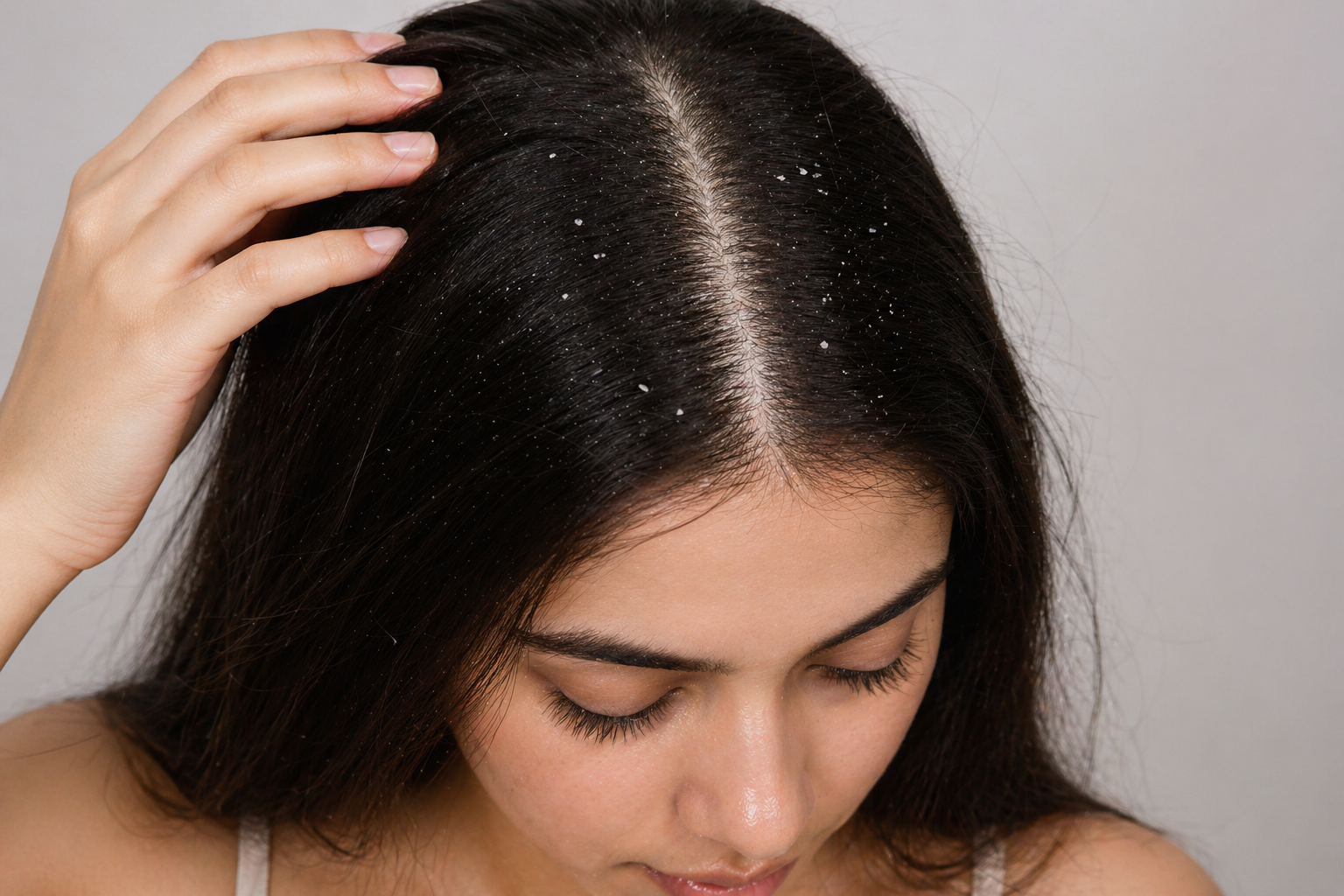
Dandruff vs Dry Scalp: Know the Difference
Flaky scalp and constant itching can be frustrating, but not every flake is dandruff. Many people confuse dandruff with dry scalp, and treating the wrong condition can actually make things worse. Understanding the difference is the first step towards choosing the right treatment.
What is Dandruff?
Dandruff is a common scalp condition caused by excess oil and the overgrowth of a yeast-like fungus called Malassezia.
Common signs of dandruff include:
- White or yellowish flakes
- Oily scalp
- Moderate to severe itching
- Redness or irritation
In some cases, it may also be linked to seborrheic dermatitis, which can affect areas like the eyebrows and sides of the nose.
What is Dry Scalp?
Dry scalp occurs when the skin lacks moisture. It is similar to dry skin on other parts of your body.
Signs of dry scalp include:
- Small, powdery flakes
- Tight or rough feeling on the scalp
- Mild itching
- Lack of oiliness
It is often triggered by cold weather, low humidity, or harsh hair products.
Key Differences
- Dandruff: Caused by excess oil and fungal growth
- Dry scalp: Caused by a lack of moisture
- Dandruff flakes: Larger, slightly oily
- The main difference lies in the cause and appearance.
- Dry scalp flakes: Smaller, dry, and powdery
How to Treat Dandruff
Treating dandruff focuses on controlling oil and reducing fungal growth.
What helps:
- Use anti-dandruff shampoos (ketoconazole, zinc, selenium)
- Wash hair regularly to prevent buildup
- Avoid heavy oiling if it worsens the flakes
- Stick to a consistent routine
How to Treat Dry Scalp
Dry scalp needs hydration and gentle care.
What helps:
- Use a mild, moisturising shampoo
- Reduce frequent washing
- Avoid hot water
- Use lightweight scalp serums or oils
Common Mistakes to Avoid
- Treating dry scalp with anti-dandruff shampoos
- Over-washing or under-washing hair
- Using harsh scrubs or strong products
- Scratching aggressively
When Should You See a Doctor?
Consider consulting a dermatologist if you notice:
- Severe or persistent flaking
- Redness or inflammation
- No improvement despite using the right products
Final Takeaway
Dandruff and dry scalp may look similar, but they require completely different treatments.
If your scalp is oily with larger flakes, it’s likely dandruff. If it feels dry with tiny flakes, it’s probably a dry scalp.
Getting this right makes all the difference in how quickly and effectively you can treat it.
follow us
When it comes to skincare, sunscreen isn’t optional; it’s essential. Whether you’re stepping out in the sun or staying indoors, protecting your skin from harmful UV rays is one of the most important steps in any routine.